

Bitcoin Mining and AI Data Centers
A Strategic Alliance for Energy Efficiency

Introduction
In a recent fireside chat, Marathon Digital Holdings CEO Fred Thiel and board member Janet George (Executive VP of AI at Mastercard) discussed a novel strategy at the intersection of Bitcoin mining and artificial intelligence (AI). They explored how integrating Bitcoin mining with AI data centers can reduce energy waste and stabilize power usage. This idea rests on a simple observation: Bitcoin mining is an exceptionally flexible energy consumer, while AI workloads are often power-intensive but intermittent. By aligning the two, miners and AI operators can turn previously wasted energy into productive work and build more resilient, efficient digital infrastructure.
Mitigating Energy Waste with Bitcoin Mining
Modern power grids face a well-known challenge with renewable energy: solar and wind generation are intermittent, often producing surplus power at off-peak times. That surplus is frequently wasted or “curtailed” because there isn’t enough immediate demand. Bitcoin mining offers a practical solution by acting as a shock absorber for the grid. Mining farms can rapidly dial their electricity consumption up or down to match the availability of excess power. When renewables like solar panels or wind turbines generate more electricity than the grid needs, Bitcoin miners can increase activity to soak up the extra energy that would otherwise go to waste. Conversely, when energy is in short supply or higher-priority needs arise, miners can quickly throttle down or pause operations. This dynamic capability transforms mining into a valuable tool for grid operators: it mitigates energy waste, smooths out supply-demand mismatches, and eases the strain on infrastructure during peak periods. In essence, mining turns what would be wasted megawatts into valuable digital assets (Bitcoin) while supporting the stability of the electrical grid.
An “Abstraction Layer” Between Demand and Supply
Thiel and George described Bitcoin mining as an abstraction layer between energy supply and demand, particularly in the context of AI data centers. AI computing workloads – like training machine learning models or running complex simulations – tend to be spiky and unpredictable. A data center might have periods of intense power draw followed by lulls when servers are underutilized. Ensuring there is always enough electricity for peak AI demand means there will inevitably be times when available power isn’t fully used by AI. This is where Bitcoin mining comes in. By colocating mining rigs alongside AI hardware, any surplus power or idle capacity can be redirected into mining operations in real time. The mining rigs act as a flexible demand buffer: they consume excess electricity when AI usage is low, and automatically scale back when AI systems ramp up their needs. To the grid (or a power provider), the combined AI-and-mining facility presents a steadier, more predictable load. The mining component absorbs variability like a sponge, effectively matching energy demand with supply. This “demand shaping” approach benefits both sides – AI projects get reliable power availability, and miners gain access to inexpensive electricity during otherwise low-demand intervals. The result is a more efficient use of every watt generated, with mining providing a bridge that ties constant energy supply to fluctuating computing demand.
Mining as a Flexible Grid Balancing Tool
A key advantage of Bitcoin mining is its ability to act as a highly flexible load on the grid. Most industrial or computing loads cannot be rapidly turned on and off without consequences; servers and manufacturing equipment have to run consistently or shut down in an orderly way. Bitcoin miners, however, can curtail their power draw at a moment’s notice, making them ideal partners for grid stability programs. In practice, large mining operations have begun participating in demand response and ancillary services markets – especially in regions like Texas that have abundant renewables and a deregulated power grid. They commit to temporarily shutting down or reducing consumption when the grid is under stress, and even to increasing consumption when there’s a sudden oversupply of electricity. During the chat, Thiel highlighted how no other large industrial load offers this degree of controllability. Grid operators can effectively treat a mining farm as a dial they turn up or down to balance the system. This flexibility has concrete benefits: it prevents blackouts by freeing up power for critical uses at peak times, and it lowers energy prices by reducing the need for costly standby power plants. The duo cited examples such as winter storms when miners halted operations to send power back to the grid, helping keep homes warm and lights on. By functioning as an interruptible and fast-reacting load, Bitcoin mining operations serve as a form of insurance for the grid – a tool that grid managers can use to maintain frequency and voltage stability. For energy entrepreneurs, this means mining isn’t just about producing cryptocurrency; it’s an adaptable energy management asset that can be monetized both in mining revenue and grid service payments.
Reusing Mining Infrastructure for AI
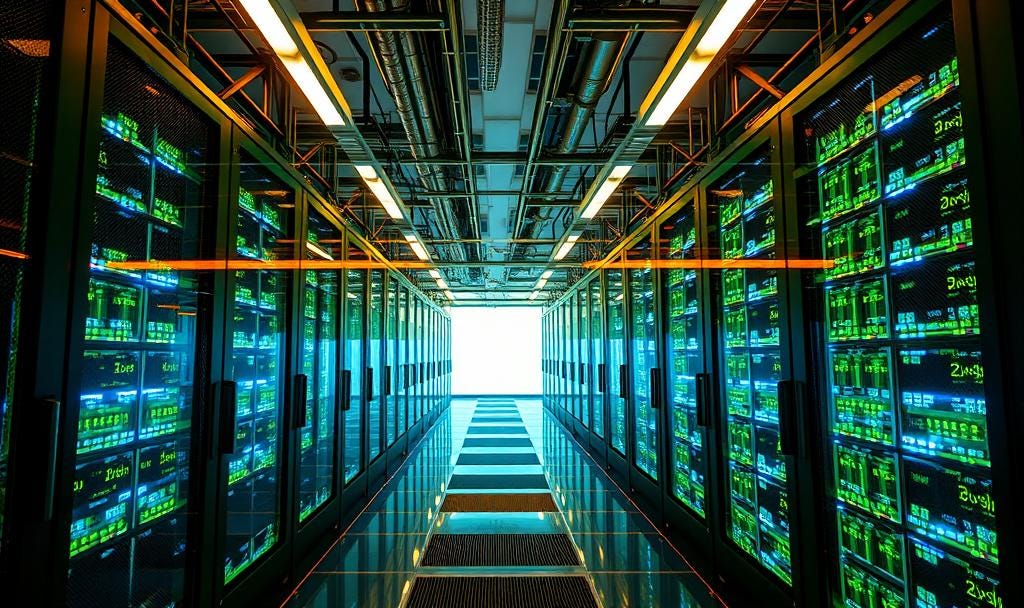
Another strategic implication discussed is the reuse of Bitcoin mining infrastructure to support AI and other high-performance computing workloads. Bitcoin mining data centers share many characteristics with traditional computing centers: they require robust power distribution, effective cooling systems, physical security, and reliable network connectivity. Companies like Marathon have invested heavily in cutting-edge infrastructure – for instance, immersion cooling technology to keep mining chips from overheating and dedicated power substations for their facilities. The beauty of this setup is that it can be repurposed or dual-purposed for AI with relative ease. Cooling systems designed for dense arrays of ASIC miners can similarly dissipate heat from racks of AI accelerators (which run hot when training large models). Power provisioning that was built to deliver dozens of megawatts to mining rigs can just as well deliver power to an AI supercomputer cluster. Even the remote locations of many mining sites (chosen for cheap electricity) become attractive for AI firms as computing moves toward where power is plentiful. By leveraging existing mining sites for AI, operators can save on capital expenditures – the buildings, power lines, and cooling are already in place. In the chat, Janet George noted that this kind of dual-use not only improves asset utilization but also hedges against business risks. If Bitcoin mining economics suffer (for example, due to regulatory changes or Bitcoin price fluctuations), a facility could pivot to revenue-generating AI services without wasting the investment in infrastructure. In short, Bitcoin mining farms can evolve into multi-purpose digital factories, providing both hashing power and computational power as needed.
Strategic Benefits of Aligning Bitcoin Mining with AI
Aligning Bitcoin mining operations with AI data center needs creates a synergy that strengthens the overall digital energy ecosystem. First, it encourages a new class of energy-aware computing facilities. Rather than viewing energy supply and compute demand as separate silos, this approach combines them into a unified strategy. The outcome is higher efficiency and lower costs: every unit of energy either produces AI-driven insights or mines Bitcoin, and never sits idle. Second, this synergy attracts investment into more energy infrastructure. Energy entrepreneurs realize that by incorporating flexible mining loads, they can de-risk renewable power projects or new power plants. They gain a guaranteed buyer for surplus electricity (the miners), which makes financing solar farms, wind parks, or even small modular reactors more appealing. Over time, this could accelerate the expansion of clean energy capacity, because miners help ensure that energy isn’t wasted even when the sun is shining or wind is blowing beyond immediate needs. Third, by designing facilities that can toggle between AI and mining tasks, operators gain remarkable agility. They can optimize for whichever use-case offers the greater value at a given moment. For example, during periods of high AI demand (say, a big machine learning contract or peak user activity), more of the power and cooling resources can be allocated to AI servers. When that demand lulls, those same resources shift back to mining. This kind of real-time optimization of resource allocation is new to the industry and could significantly improve the economics of data centers. It essentially turns data centers into adaptive, multi-modal operations. Lastly, the partnership between AI and mining fosters innovation in areas like energy management software and power electronics. To coordinate two very different types of computing loads, companies are developing smarter systems to monitor energy usage and automatically balance it. Over the long term, these advances contribute to a more digital, responsive grid infrastructure – one where large loads aren’t liabilities, but active participants in maintaining equilibrium.
Bitcoin as an Energy Platform: Sustainability and Growth
Perhaps the most forward-looking insight from Thiel and George’s discussion is the idea of Bitcoin as an emerging energy platform. Traditionally, we think of Bitcoin as a financial network. But from an energy perspective, Bitcoin mining is also a globally distributed energy buyer of last resort. It will take any source of electricity – no matter how remote or transient – and convert it into economic value by securing the Bitcoin network. This opens up powerful opportunities to improve sustainability. One clear example is methane mitigation. Methane from landfills and oil wells is often flared or vented, because capturing and using it is difficult and uneconomical in most cases. Bitcoin miners are now beginning to deploy portable mining units to these sites, using generators to convert waste methane into electricity on the spot to mine Bitcoin. In doing so, they prevent a super-potent greenhouse gas from escaping into the atmosphere, while producing revenue that can fund the operation. Marathon’s team itself has launched a pilot project at a landfill in Utah to do exactly this – turning trash into digital treasure. More broadly, by acting as a constant, flexible demand for energy, Bitcoin mining can underpin the development of more resilient and greener grids. It supports sustainable grid growth in several ways: it makes renewable-heavy energy systems more stable (as discussed earlier), it provides a financial incentive to build extra generation capacity (since excess can be monetized through mining), and it can even provide off-grid power solutions in remote areas. In a future scenario painted by the panel, one might imagine each renewable power plant or even each AI data center having a built-in Bitcoin mining component – a routine part of the design, there to ensure no joule of energy is wasted. Bitcoin mining thus evolves into an energy platform, seamlessly integrated with other industries and use cases. It’s a platform that converts electrons to digital value, encourages carbon-reducing projects, and helps balance the complex dance of supply and demand in modern grids.
Conclusion:
The convergence of Bitcoin mining and AI data centers represents a strategic alignment of two seemingly disparate industries for mutual and societal benefit. For bitcoin miners, branching into supporting AI workloads and grid services opens new revenue streams and uses for their infrastructure. For AI companies and energy producers, the presence of flexible mining load means more efficient operations and fewer energy constraints. As Fred Thiel and Janet George emphasized, this synergy can improve how we use energy in the digital age – reducing waste, enhancing reliability, and spurring sustainable innovation. By treating Bitcoin mining not just as coin generation but as a versatile energy management tool, miners and entrepreneurs are poised to play a pivotal role in the next wave of both the energy revolution and the AI revolution. In the coming years, we will likely see more “AI-ready” mining centers and “mining-enhanced” power projects, all contributing to a smarter balance between computing demand and energy supply. The takeaway is clear: Bitcoin’s network isn’t only securing digital transactions; it’s increasingly underpinning a more efficient and greener energy future, one data center at a time.
Sources: